Film presented in Greece, prepared by the Alumnus Club for UNESCO within the Anniversary Program "Romania in UNESCO '70"
Romanian Federation of Associations and Clubs for UNESCO, participant in the International Cultural Festival of the Five Continents, held in Greece
Nikaia, Greece | 23– October 25 2026
During October 23–25 2026, the city of Nikaia in Greece hosted the International Cultural Festival of the Five Continents, an event dedicated to intercultural dialogue, the diversity of artistic expressions and international cooperation.
The first edition of the CINEMA CORNER project took place during the festival, in which the Romanian Federation of Associations and Clubs for UNESCO also participated (FRACU), by presenting a video material with a strong anniversary and symbolic meaning for Romania.
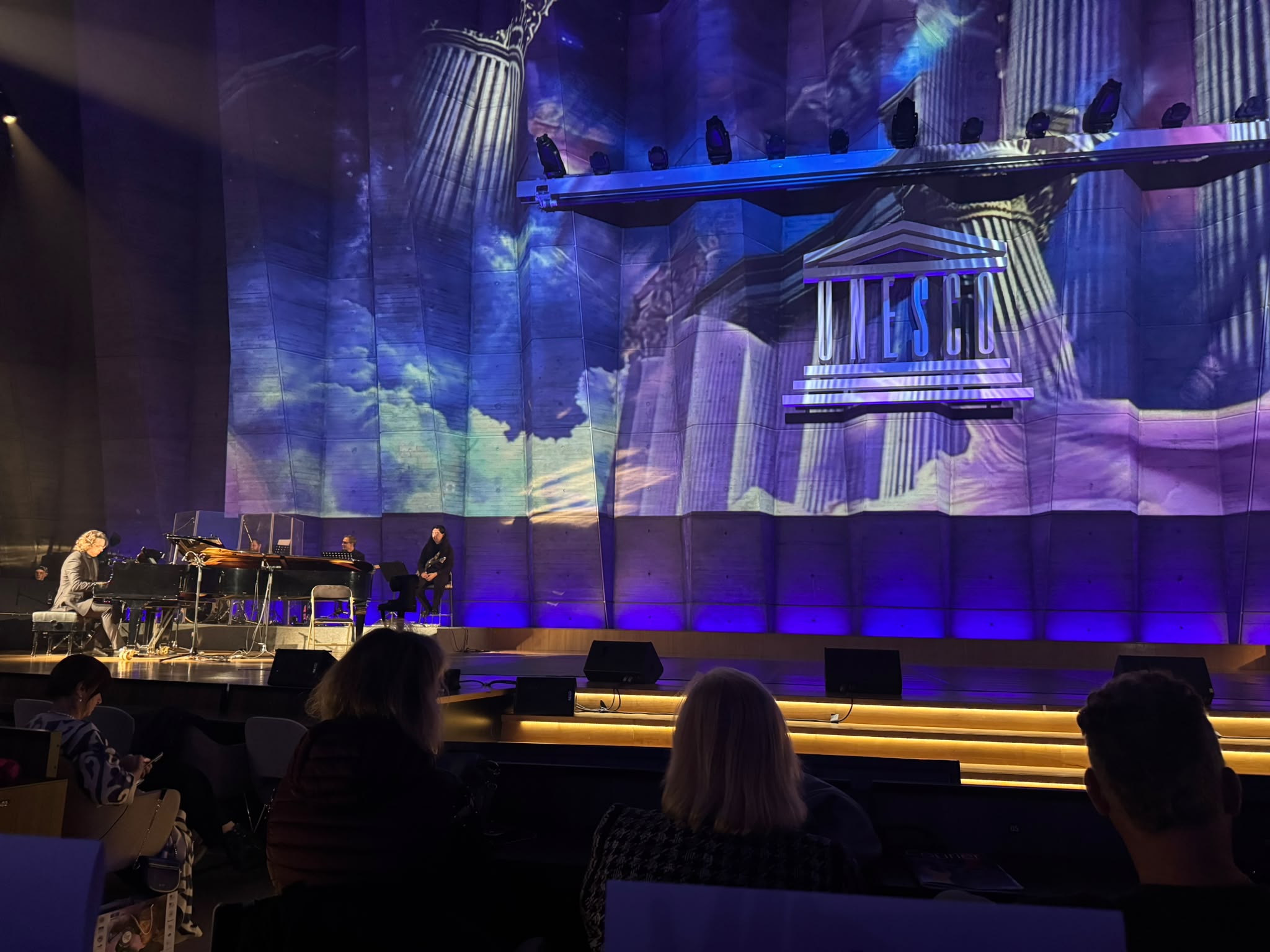
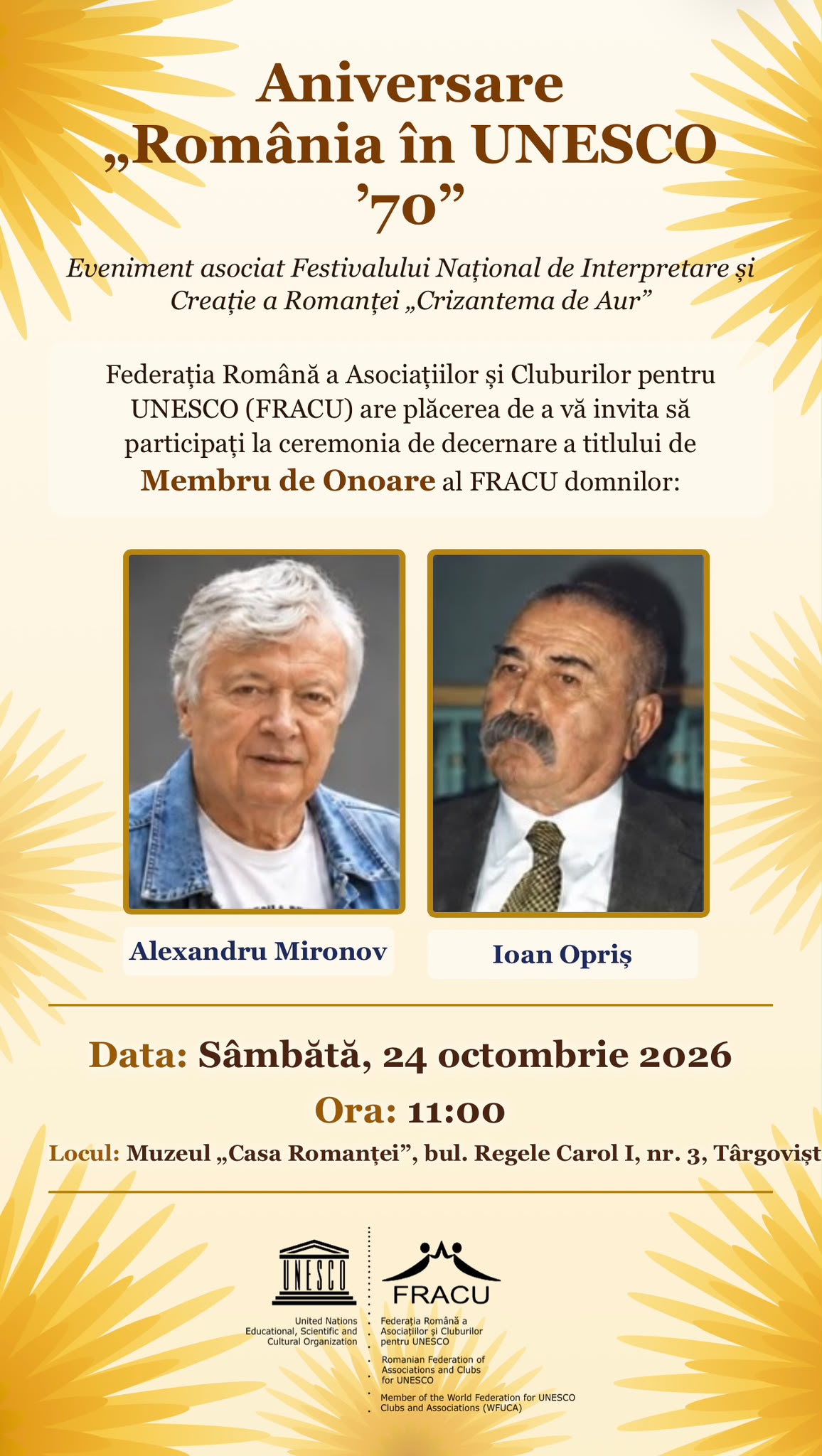
The video material scored 70 de ani de la aderarea României la UNESCO, UNDERLINING, at the same time, almost 30 of years of activity of the Romanian Federation of Associations and Clubs for UNESCO in the field of UNESCO civil society. The presentation was an opportunity to bring to the attention of the international public the continuity of Romania's commitment to the ideals and values of UNESCO, as well as the contribution of civil society to the promotion of education, culturii, dialogue and understanding between peoples.
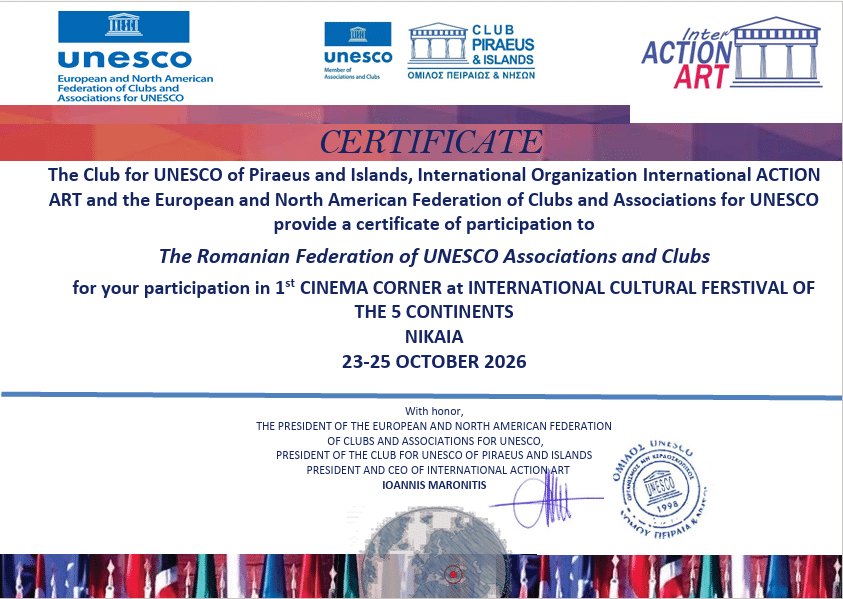
FRACU's participation was recognized by awarding the Participation Certificate, offered by the UNESCO Club of Piraeus and the Islands, International Organization International ACTION ART and the European and North American Federation of Clubs and Associations for UNESCO, through its president, John Maronites.
This recognition represents an appreciation of the Romanian Federation's involvement in international cultural initiatives and a confirmation of the importance of collaboration between UNESCO civil society organizations and structures from different countries.
Romania's presence at Nikaia, in such an important anniversary year, provided yet another opportunity to publicize our country's contribution to the UNESCO movement and reaffirm the role of civil society in building dialogue bridges, solidarity and international cooperation through culture and education.