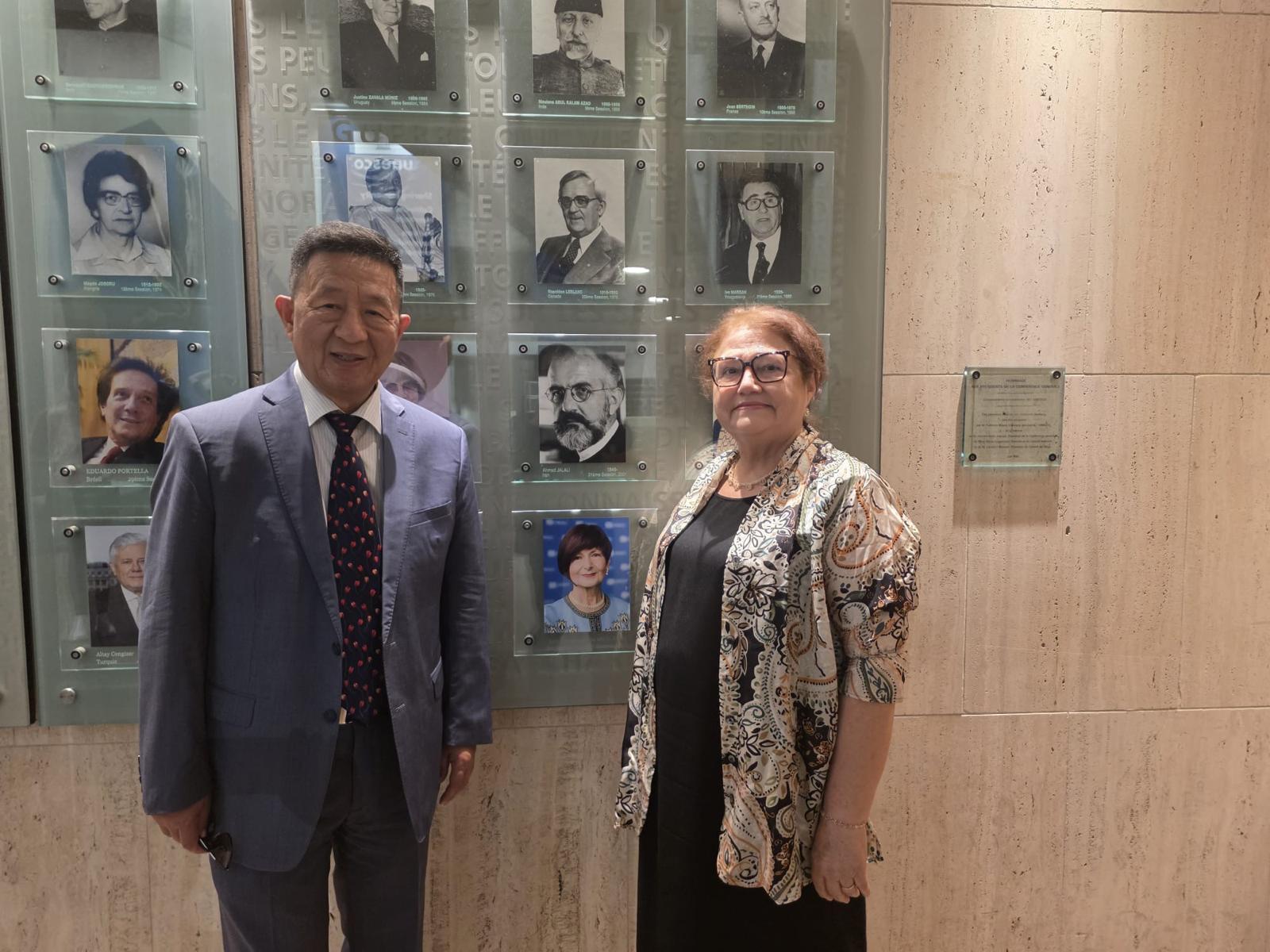
In spectacular surroundings of the Palace Trinca Foligno, Italy, the last phase of the International Contest took place The factory in the Landscape - project presentation, candidates and award ceremony.
International competition The factory in the landscape, promoted by the Foligno and Valle del Clitunno UNESCO Club and supported by the Italian National Commission for UNESCO and the Italian Federation of UNESCO Clubs (FICLU), reached its ninth edition this year, is dedicated to business people, GOVERNMENT, institutions and associations that develop projects that give priority to the environment and that demonstrate a particular sensitivity to the importance of the impact on the surrounding landscape.
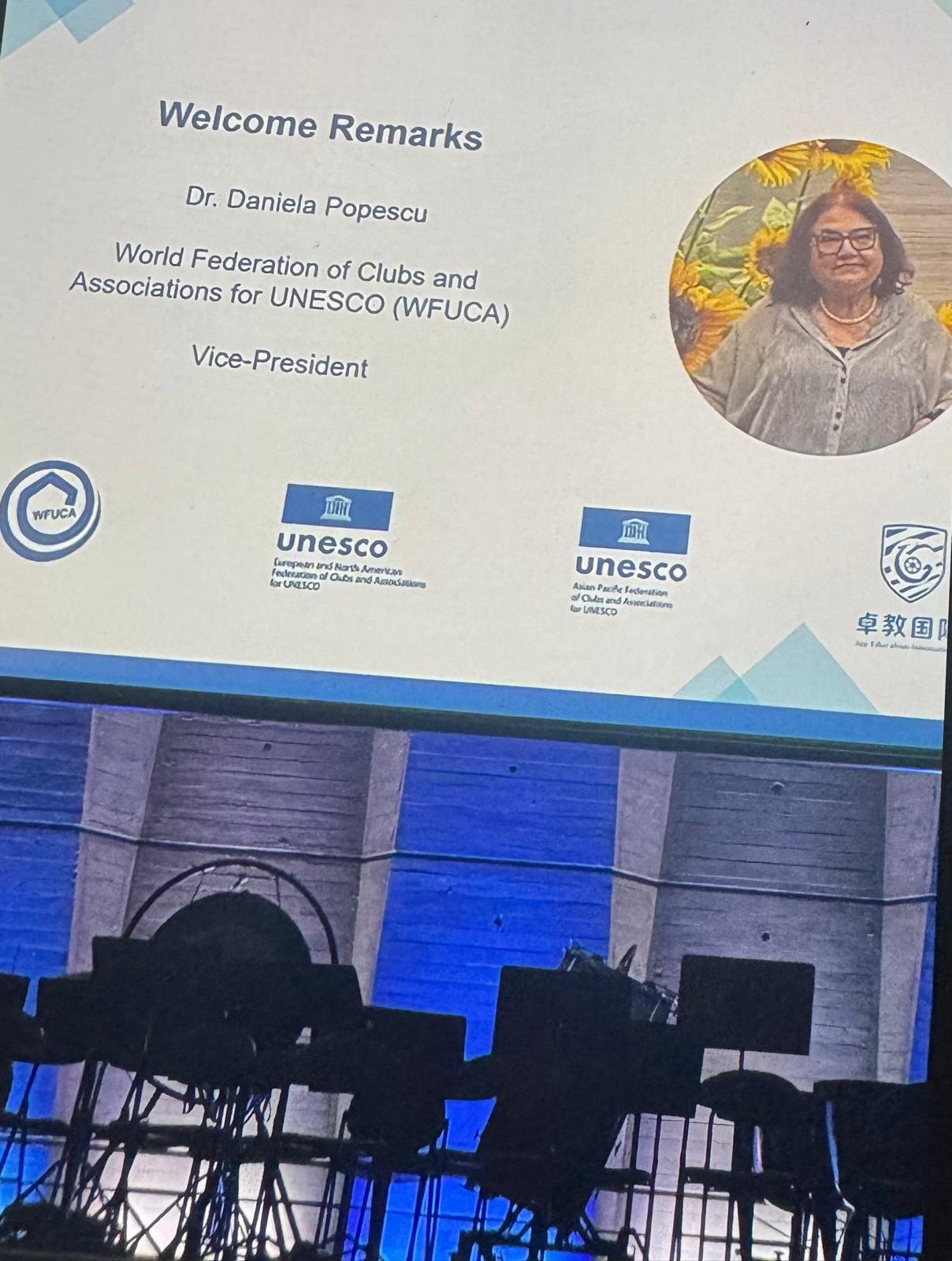
Starting with the year 2015, this event is under the auspices of the European Federation of Associations, Centres and Clubs for UNESCO (FEACU) of which he is president, for the second term, Mrs. Dr.. Daniela Popescu. The purpose of the competition and the prizes awarded, as stipulated in the regulation "it is educational and not competitive".
The competition is divided into two sections:
- The section of business people who have built a headquarters or renovated a workplace, taking great care of the impact on the environment and the landscape.
- The section reserved for administrations and institutions that promoted, implemented or restored, rehabilitated places/works of public and social utility in the field of territory planning and management.
Like every year, the criteria that were the basis of judging those 27 of projects entered in the contest were based on the evaluation principles found in European Landscape Convention, signed by the Council of Europe, in Florence, în data de 20 October 2000:
- CRITERIA 1 (for both sections): The quality of intervention compared to that of inclusion in the natural landscape, historical and cultural (respect for the vocation of the territory, historical cultural heritage and preservation of local traditions);
- CRITERIA 2 (for the first section): Respect for the protection of the environment and the impact on the landscape (entrepreneur who builds his own workplace, the aesthetic quality of the intervention, evaluation of technologies, the origin and quality of the materials, the impact on the environment);
- CRITERIA 3 (for the 2nd section): Sustainable development of the territory (evaluation of sustainable development policy, of the level of active participation of citizens, integration into the territorial organization of which they are a part – durable qualities, Ecology, social, ECoNoMIC, cultural and formal, contribution to the improvement and enrichment of the landscape).
The projects participating in the competition were nominated and supported by UNESCO clubs or associations and judged by representatives of the Italian UNESCO National Commission, FICLU, ICCROM, ICOMOS, the Italian Ministry of Culture as well as professors from some Universities in Rome and Turin.
This year Romania was represented by the project proposed by the Alumnus Club Association for UNESCO "Restoration of the cultural space of the Străbune Roots School, from Călinești, Maramureș", project carried out by the Cultural Association "Călineștenii Șări Maramureşului", member of the Romanian Federation of Associations, Clubs and Centers for UNESCO – FRACCU.
Project, entered in the competition by Romania, he won International competition prize, award given for involvement in the preservation of tangible and intangible assets, materialized through the restoration, in the traditional way, of a wooden house respecting the old techniques of covering with shingles.
The award was handed to the President of the Cultural Association "Călineștenii Șări Maramureşului", Măriuca Verdeș, the one who, through all the activity sustained in recent years, has contributed, along with other volunteers, to the revival and maintenance of traditions specific to the Maramuresian plains, the threshold of the Ancient Roots School being passed, since its establishment, in 2015, to date, by many children and young people from Călinești and neighboring towns.
As stated by Dr. Daniela Popescu, President of the European Federation of Associations, Centres and Clubs for UNESCO (FEACCU), "this award represents the recognition of both UNESCO's international values, as well as the volunteers and all those who promote the ideals of UNESCO".
The Romanian delegation to this competition was composed of representatives of ai Alumnus Club for UNESCO and the Association The inhabitants of Călinești, Maramureș County.